Rope Access Services in New York City
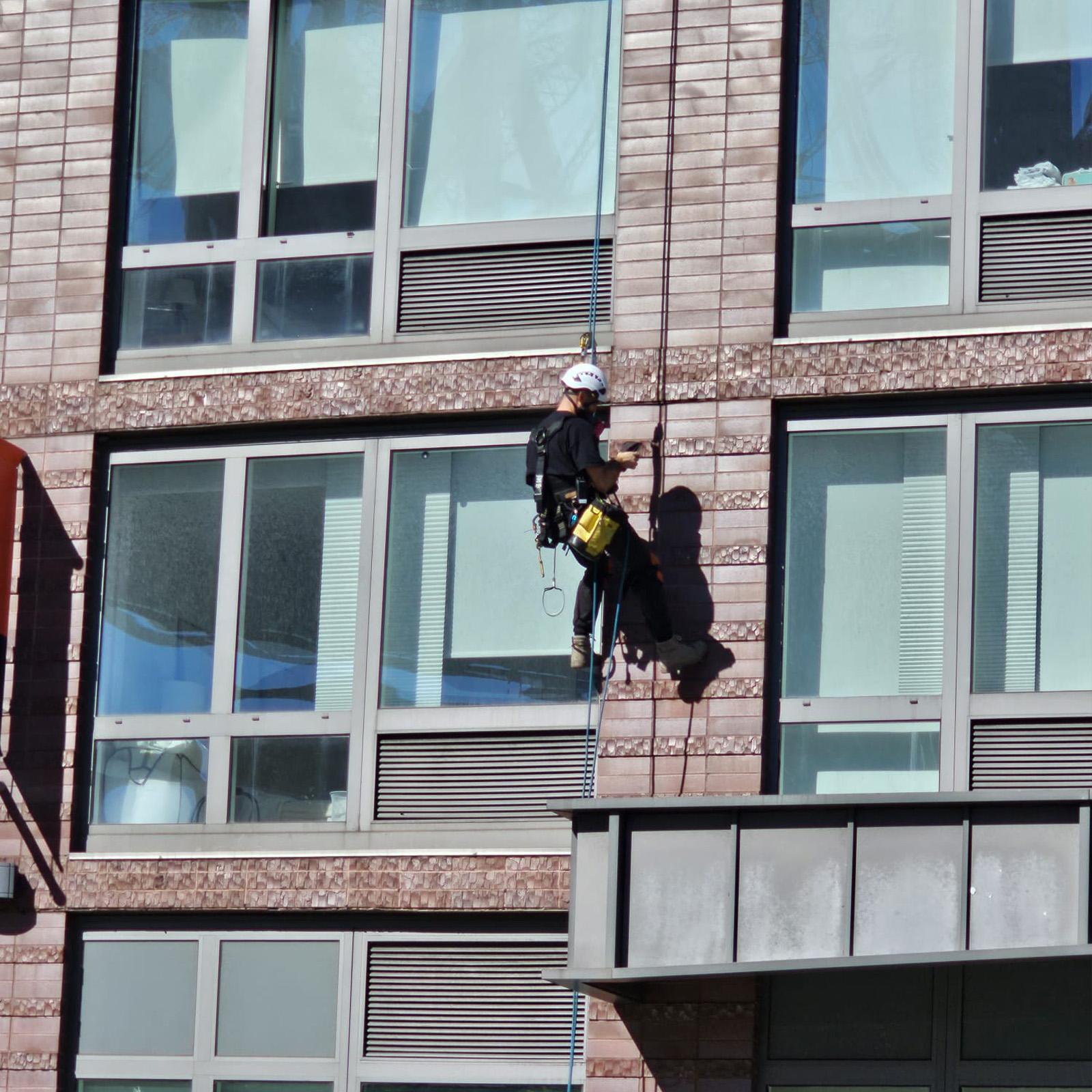
Rope access gives property owners a practical way to evaluate hard-to-reach building conditions without immediately mobilizing scaffolding, lifts, or sidewalk sheds. In New York City, access often determines inspection cost, schedule, and disruption. For many buildings, suspended exterior evaluation can provide a direct and efficient method for documenting facade, roof, parapet, balcony, terrace, and waterproofing conditions.
ROCK Architecture & Engineering provides rope access services across NYC for buildings that require close-up exterior review. Our team combines controlled access methods with architectural and engineering judgment, helping owners understand existing conditions, prioritize repairs, and make informed decisions before larger restoration work begins.
To discuss your building access needs, call ROCK Architecture & Engineering at (212) 929-0324.
Vertical Access Building Inspections
Many exterior building conditions cannot be fully evaluated from the sidewalk, roof, or adjacent setbacks. Vertical access inspections allow qualified personnel to observe facade and envelope conditions from close range, helping identify deterioration that may not be visible through general observation alone.
ROCK documents conditions such as cracked masonry, displaced stone, spalled concrete, open joints, rust staining, failed sealants, deteriorated coping, and water infiltration patterns. These observations can help owners determine whether limited repairs, probes, testing, or a larger facade restoration program may be needed.
This approach is especially useful when a building has localized concerns, recurring leaks, isolated distress, or areas that require review before selecting a broader access strategy.
Close-Up Facade & Parapet Evaluations
Facade and parapet conditions are critical to building performance and public safety. Over time, mortar joints can open, lintels can corrode, coping stones can shift, and water can enter through small defects before interior damage becomes obvious.
Using rope access, ROCK can evaluate exterior wall assemblies, window perimeters, parapets, coping stones, balconies, terraces, and other elevated building elements. Findings are documented with close-range photographs and location-specific notes so owners can clearly understand what is happening and where attention may be needed.
When exterior deterioration is identified, our findings can support repair planning, contractor coordination, and related services such as facade restoration or annual parapet inspections.
Hard-to-Reach Leak Investigation
Water infiltration can be difficult to diagnose when the source is located above grade, behind facade materials, or at transitions between roof, wall, window, and waterproofing systems. Rope access inspections can help narrow the investigation area by allowing close-up review of exterior conditions that may be contributing to active leaks.
ROCK evaluates visible defects such as failed sealant joints, open masonry joints, deteriorated flashing interfaces, cracked materials, clogged drainage components, and compromised waterproofing transitions. When needed, our observations may be paired with additional investigation methods, probes, testing, or repair recommendations.
This type of targeted exterior review can help property managers, boards, and owners move from general concern to specific next steps.
Documentation for Repair Planning
Clear documentation is essential before exterior repair work begins. Close-range inspection findings can help define repair areas, clarify priorities, and reduce uncertainty during budgeting or contractor pricing.
ROCK provides practical documentation that may include photographs, field observations, condition descriptions, repair recommendations, and next-step guidance. This information can help owners determine whether a localized repair, more extensive restoration, or additional professional evaluation is appropriate.
For larger programs, rope access findings may also help inform construction phasing, access planning, DOB filing coordination, and long-term capital planning. When appropriate, we can coordinate this work with related professional services provided by ROCK.
Exterior Access Strategy for Complex Buildings
Not every building can be evaluated efficiently with a single access method. Dense sidewalks, narrow lot lines, setbacks, courtyards, roof obstructions, adjacent properties, and occupied spaces can all complicate exterior inspection planning.
ROCK reviews building geometry, inspection goals, access constraints, roof conditions, and documentation needs before recommending an appropriate approach. In some cases, rope access may be the most efficient method. In others, it may be used alongside visual observation, scaffolding, lifts, probes, or drone inspections.
By selecting the right access method for the condition being evaluated, owners can obtain better information while managing cost, disruption, and schedule.
Safety, Coordination, & Building Operations
Exterior access work must be carefully planned. Rope-based inspection requires appropriate equipment, qualified personnel, site coordination, weather awareness, controlled work areas, and communication with building staff.
ROCK coordinates inspection work with building operations, safety requirements, and project goals in mind. Before work begins, we consider the areas to be reviewed, the building conditions, site logistics, and the documentation needed to support the owner’s next steps.
Our goal is to help owners evaluate difficult exterior conditions efficiently while maintaining a disciplined approach to access planning, safety coordination, and technical review.